
When Stress Shows on Your Face: What Your Skin Is Trying to Tell You
There Are Times When the Mirror Tells a Different Story
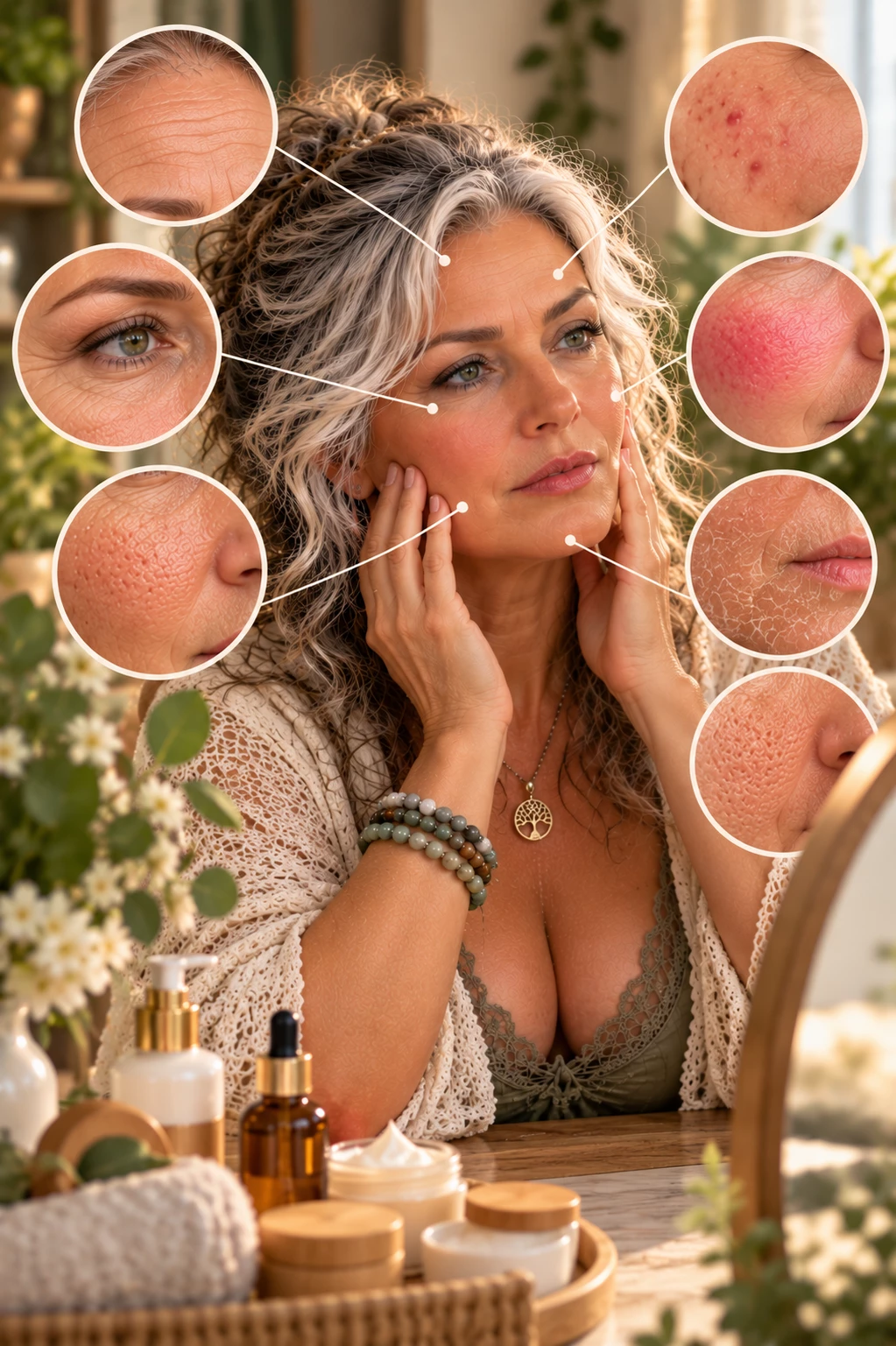
You may know the feeling.
You still have the same cream, the same face, the same habits.
But something has changed.
Your complexion seems duller. The area around your eyes looks more pronounced. Your skin feels tighter.
Certain areas suddenly become more sensitive.
We immediately blame age, the weather, a new product, or hormones.
Sometimes, the culprit is much more ordinary.
Stress.

Stressed Skin Does Not Always Look the Same
Stress affects the body as a whole, and the skin can reflect periods of tension.
It is not always dramatic.
Skin that looks a little less radiant.
A lack of comfort.
A feeling of dryness that keeps coming back.
Small imperfections that seem to appear for no obvious reason.
An unusual sensitivity to products that were previously well tolerated.
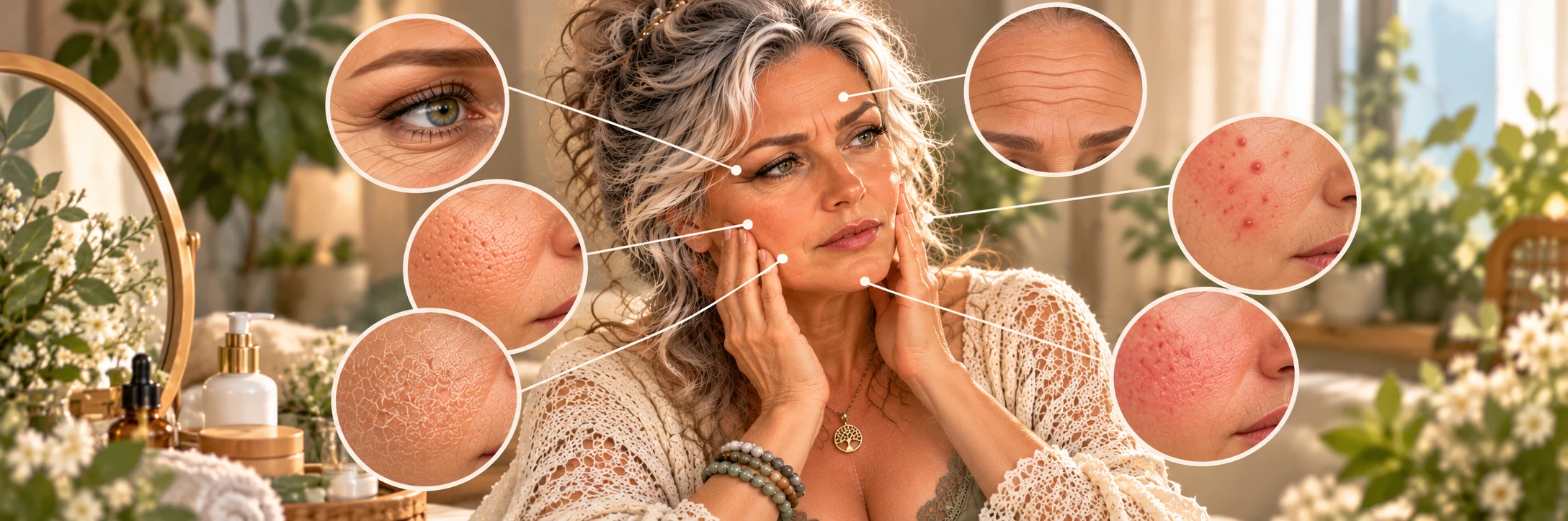
Taken individually, none of these signs allows us to say: "It's stress."
But when they appear during a particularly demanding period, they can provide an interesting clue.
The "Cortisol Face" Is Not a Diagnosis
The expression is everywhere.
It gives the impression that there is such a thing as a typical cortisol face.
Reality is less clear-cut.
Cortisol plays a role in the stress response, but the appearance of the face depends on a multitude of factors.
Sleep, hydration, hormones, sun exposure, diet, age, genetics, and skincare habits can all play a part.
It is therefore better to talk about skin signs that may accompany a period of stress than to invent yet another cosmetic diagnosis.
That distinction matters.
Why Your Complexion May Look Different
When we are stressed, the body temporarily changes some of its functions.
Blood circulation and the distribution of resources, among other things, may change.
Add a poor night's sleep, less time spent on skincare, a different diet, or simply accumulated fatigue.
The result can show.
The skin may look less radiant.
But we should be cautious about the idea that stress literally "deprives" the skin of oxygen.
What we see in the mirror is the result of several overlapping mechanisms.
Skin is never as simple as one cause and one effect.
The Skin Barrier Can Take a Hit Too
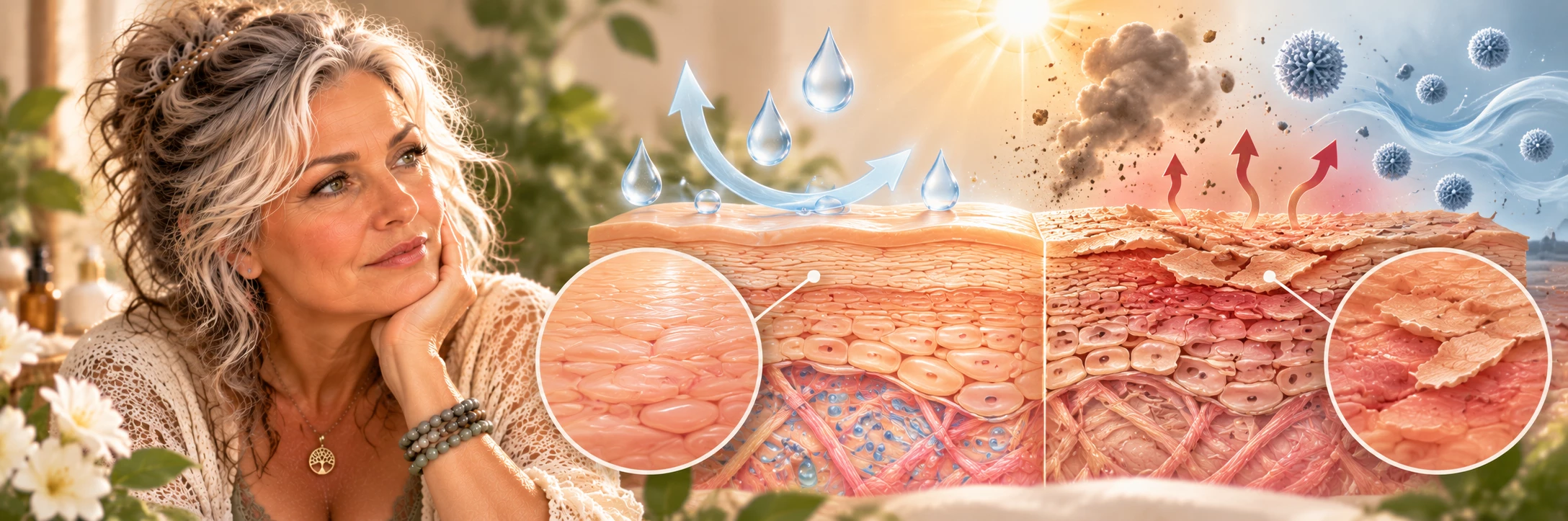
The surface of the skin forms a barrier.
Among other things, it helps limit water loss and contributes to protection against the environment.
When this barrier becomes less effective, the skin can become drier, less comfortable, and more reactive.
And during a stressful period, we do not always take the best care of this barrier.
We cleanse more because we feel that our face is "dirty."
We pile on products because we want to fix what is wrong as quickly as possible.
We exfoliate.
We change our serum.
We add a mask.
Then another.
And sometimes, the skin ends up receiving exactly the opposite of what it needed.
The "I'll Fix This Quickly" Trap
It's human.
When something feels wrong, we want to do something about it.
Dull skin? Add an active ingredient.
Dry skin? A new cream.
An imperfection? A targeted treatment.
More visible wrinkles? A device.
The problem is that skin does not always respond well to successive interventions.
Sometimes it needs stability.
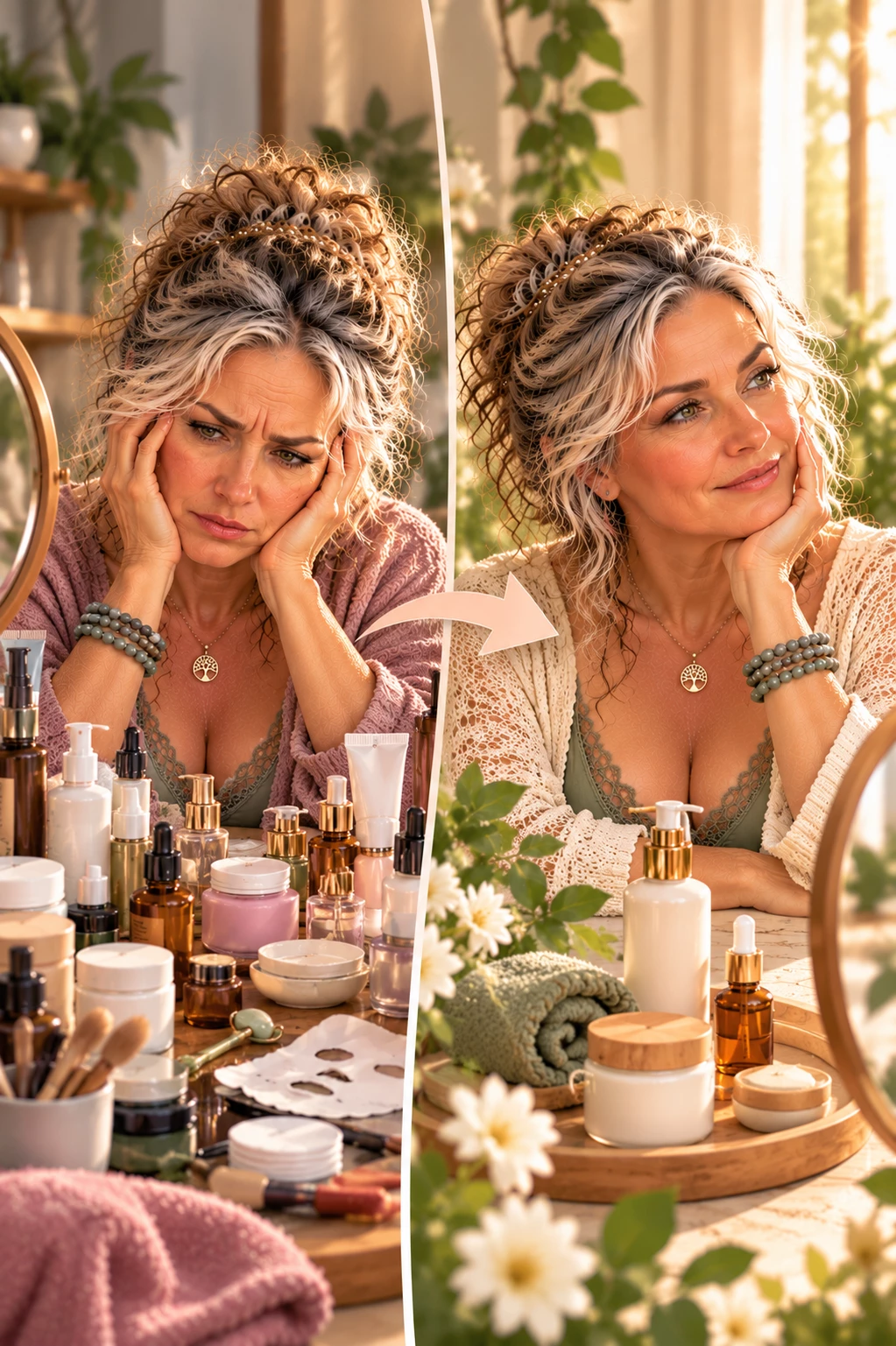
A simple, consistent routine is sometimes more sensible than a succession of new products.
Especially when the skin is already sensitive.
Sleep Leaves Its Mark on the Face
One bad night is not going to destroy your collagen.
But several difficult nights can certainly show.
The eyes look more tired.
The complexion looks less fresh.
The features look less rested.
And when lack of sleep becomes chronic, it adds to the other factors that can disrupt the body's overall balance.
Sleep is not a cosmetic treatment. It is a period of recovery that the entire body can benefit from.
When Stress Changes Our Habits Too
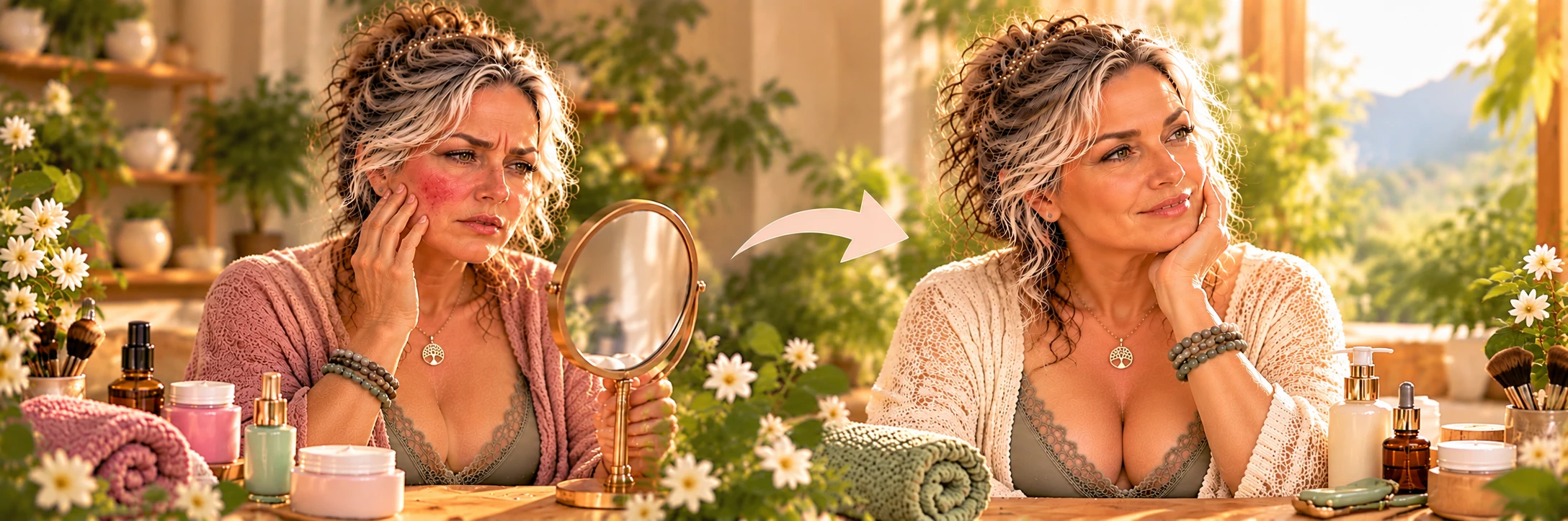
This may be where the connection between stress and skin becomes most concrete.
A stressed person may also:
- sleep less;
- drink more coffee;
- eat differently;
- move less;
- spend more time in front of a screen;
- forget to drink enough water;
- abandon their usual routine;
- or, on the contrary, pile on more products and treatments.
All of these things can influence the appearance of the skin.
Stress can therefore act directly, but also indirectly, by changing our everyday habits.
What to Do When Your Face Looks Tired
Start by not panicking.
One bad week does not condemn your skin.
Before adding anything, go back to the basics.
- Gentle cleansing if needed;
- hydration;
- sun protection;
- a consistent routine;
- as much sleep as possible.
And above all, give your skin time to regain its balance.
If it is irritated, this is probably not the best time to introduce five new active ingredients.
What If the Problem Persists?
It is also important to know when to look beyond simple stress.
Skin that remains very dry, red, painful, irritated, or that undergoes lasting changes deserves a search for other explanations.
Stress can accompany a skin problem.
We should not automatically blame it for everything that happens to the skin.
A wrinkle is not a measure of cortisol. A blemish is not proof of a hormonal imbalance. A dull complexion does not tell us everything about our health.
Looking at Your Face Differently
Our face is not a perfect dashboard.
But our skin can sometimes remind us of something very simple:

We are tired.
Maybe we need to slow down.
Not necessarily buy something.
Not necessarily start a new routine.
Sometimes the best thing we can do is simply stop asking our skin to keep up with our pace when we ourselves can no longer keep up.
Skin lives with us. It absorbs a lot. And sometimes, it deserves for us to just leave it alone for a while.
MEDICAL DISCLAIMER: SZ provides general information for educational purposes. It does not replace the advice, diagnosis, or treatment of a qualified healthcare professional. SZ does not diagnose, treat, cure, or prevent disease. For health-related decisions, consult a qualified professional.
Disclosure: Some links may be partner links. SZ may receive a commission from Canadian companies on qualifying purchases, at no extra cost to you and without influence on our editorial content.