
The Skin Microbiome: An Evolving Ecosystem
Your skin has its own climate
This is probably one of the most useful concepts for understanding the microbiome:
microorganisms live in an environment that is partly created by your skin.
Your skin produces sebum.
It contains water.
It sweats.
It releases various molecules.
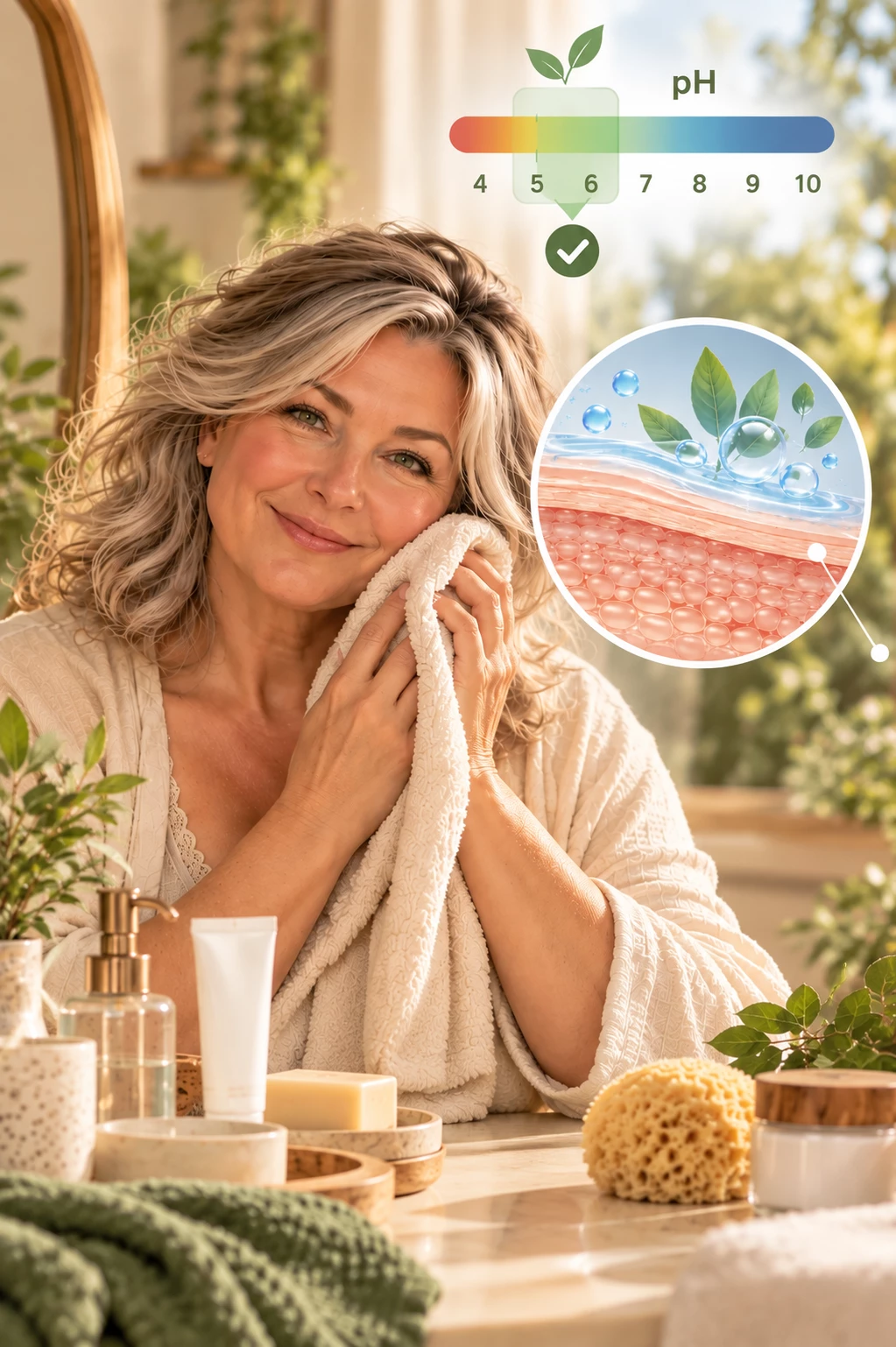
It has a slightly acidic pH.
It is constantly renewing itself.
All of this helps create the conditions in which certain microbial populations can thrive more easily than others.
The pH of the skin's surface is generally acidic, often around 4 to 6 depending on the area and the conditions under which it is measured.
This is sometimes referred to as the “acid mantle.”
The expression may sound mysterious, but the idea is simple: the surface of the skin has a particular chemistry that contributes to how it functions.
And this chemistry is not independent of the microbiome.
It is therefore a true system of interactions.

The microbiome is not fixed
Another important idea: your microbiome is not a population that settles in once and remains unchanged.
It evolves.
Age, hormones, sebum production, humidity, the environment and skincare habits can all change the conditions in which microorganisms live.
The changes begin very early.

At puberty, for example, increased activity of the sebaceous glands considerably changes the skin environment and is accompanied by significant changes in the microbiome.
Then, throughout adulthood, some communities may remain relatively stable within the same person, while continuing to be influenced by the environment.
As we age, changes in sebum, hydration and the skin barrier can in turn modify this ecosystem.
But be careful with an appealing idea that we sometimes encounter:
Aging is caused by an imbalance in the microbiome.
Science does not allow us to state this so simply.
Researchers do observe changes in the microbiome with age, but in each case it remains difficult to determine what is a cause, what is a consequence, and what is simply an association.
This distinction matters.
It prevents us from turning an interesting scientific discovery into a cosmetic promise.
Should you be afraid of “killing the good bacteria”?
Not exactly.
This is probably one of the most exaggerated messages surrounding the microbiome.
The issue is not that cleansing temporarily removes some microorganisms.
The skin is constantly exposed to its environment, and its microbiome is itself dynamic.
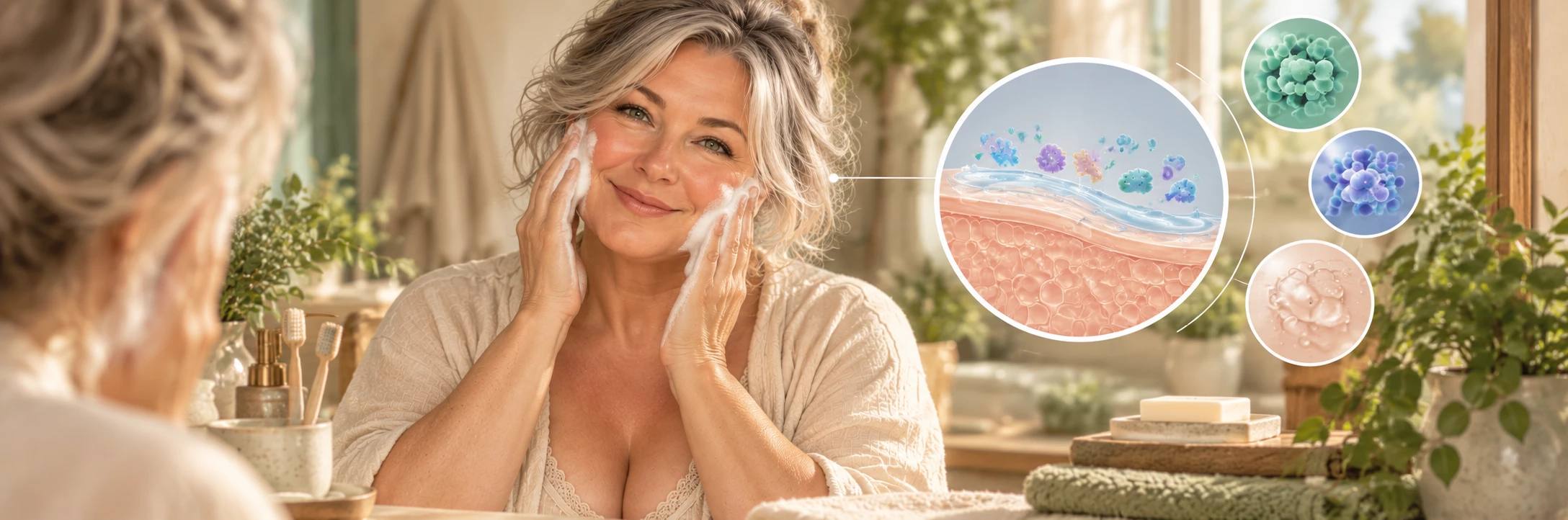
The more important question is whether certain repeated habits can permanently alter the skin environment, particularly by disrupting the barrier, excessively removing surface lipids or changing the pH.
Some soaps or highly alkaline cleansers can, in particular, disrupt the pH and barrier function, whereas the surface of the skin is naturally acidic.
This obviously does not mean that you should stop washing your skin.
It simply means that:
Cleansing the skin and stripping the skin are two different things.
And that distinction is essential.
Your microbiome is also highly personal
Two perfectly healthy people can have different skin microbiomes.
And even within the same person, the microbiome of the face may be different from that of the arm.
Research shows that the anatomical site plays an important role in the composition of microbial communities.
Differences between individuals can also be significant.
This helps explain why it is difficult to define a universal recipe such as:
“Here are exactly the bacteria everyone should have on their skin.”
The reality is much more interesting.
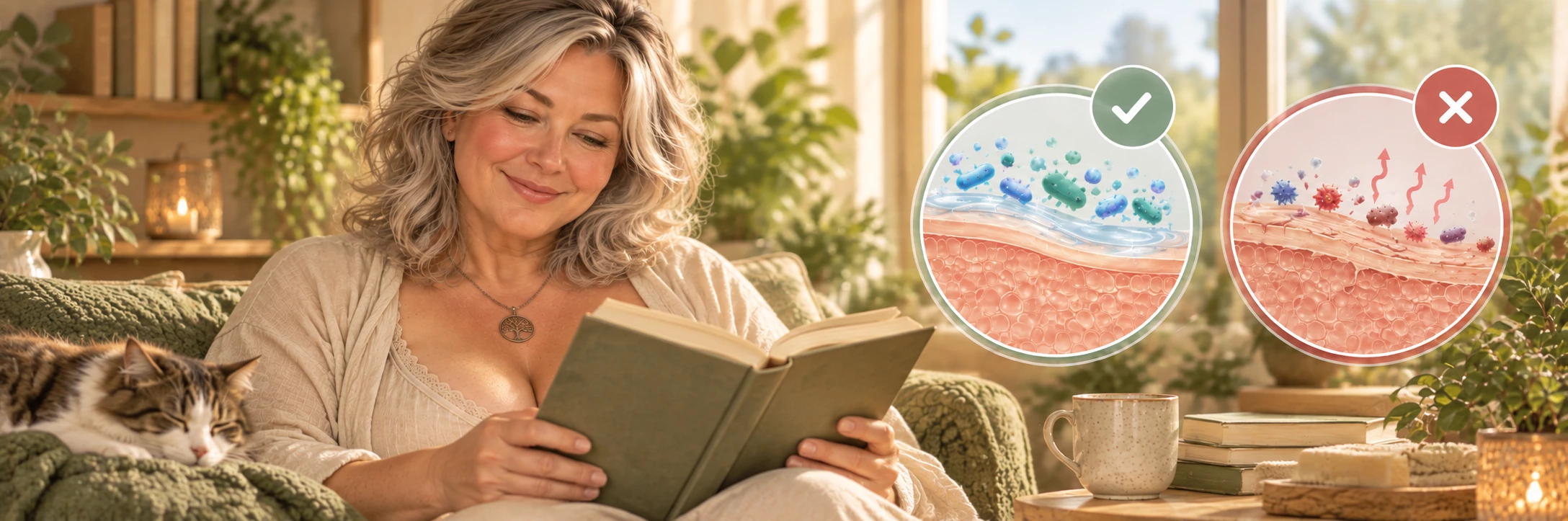
There are species that are commonly found in humans, but their proportions and interactions can vary considerably.
Your skin is therefore not a standard model.
It has its own environment.
What if healthy skin wasn't “perfect” skin?
We sometimes tend to imagine healthy skin as perfectly smooth and even, without visible pores, redness or any imperfections.
The microbiome encourages us to look at skin differently.
Living skin is a dynamic system.
It sweats.
It produces sebum.
It renews itself.
It hosts microorganisms.
It is constantly exposed to its environment.
It adapts.
Skin health does not necessarily mean making the skin perfectly controlled.
Rather, it means maintaining an environment that is stable enough for its natural mechanisms to function properly.
And that is an important distinction.
What you can take away
If you were to remember only a few ideas from this series, they would be these:
The microbiome is alive.
It constantly evolves and is not identical from one person to another.
The skin creates its own environment.
Its pH, sebum, hydration and other characteristics influence the microorganisms that live there.
The microbiome is not an army of “good bacteria.”
It is a complex community in which interactions matter just as much as the species that are present.
Cleansing is not necessarily the problem.
It is the way you cleanse, how often you do it and the impact on the skin environment that deserve our attention.
And above all:
Healthy skin is not sterile skin. It is skin whose ecosystem functions in a dynamic balance.
MEDICAL DISCLAIMER: SZ provides general information for educational purposes. It does not replace the advice, diagnosis, or treatment of a qualified healthcare professional. SZ does not diagnose, treat, cure, or prevent disease. For health-related decisions, consult a qualified professional.
Disclosure: Some links may be partner links. SZ may receive a commission from Canadian companies on qualifying purchases, at no extra cost to you and without influence on our editorial content.