
Stress, Cortisol and Collagen: When the Skin Comes After Everything Else
Stress Doesn't Stop at the Mind
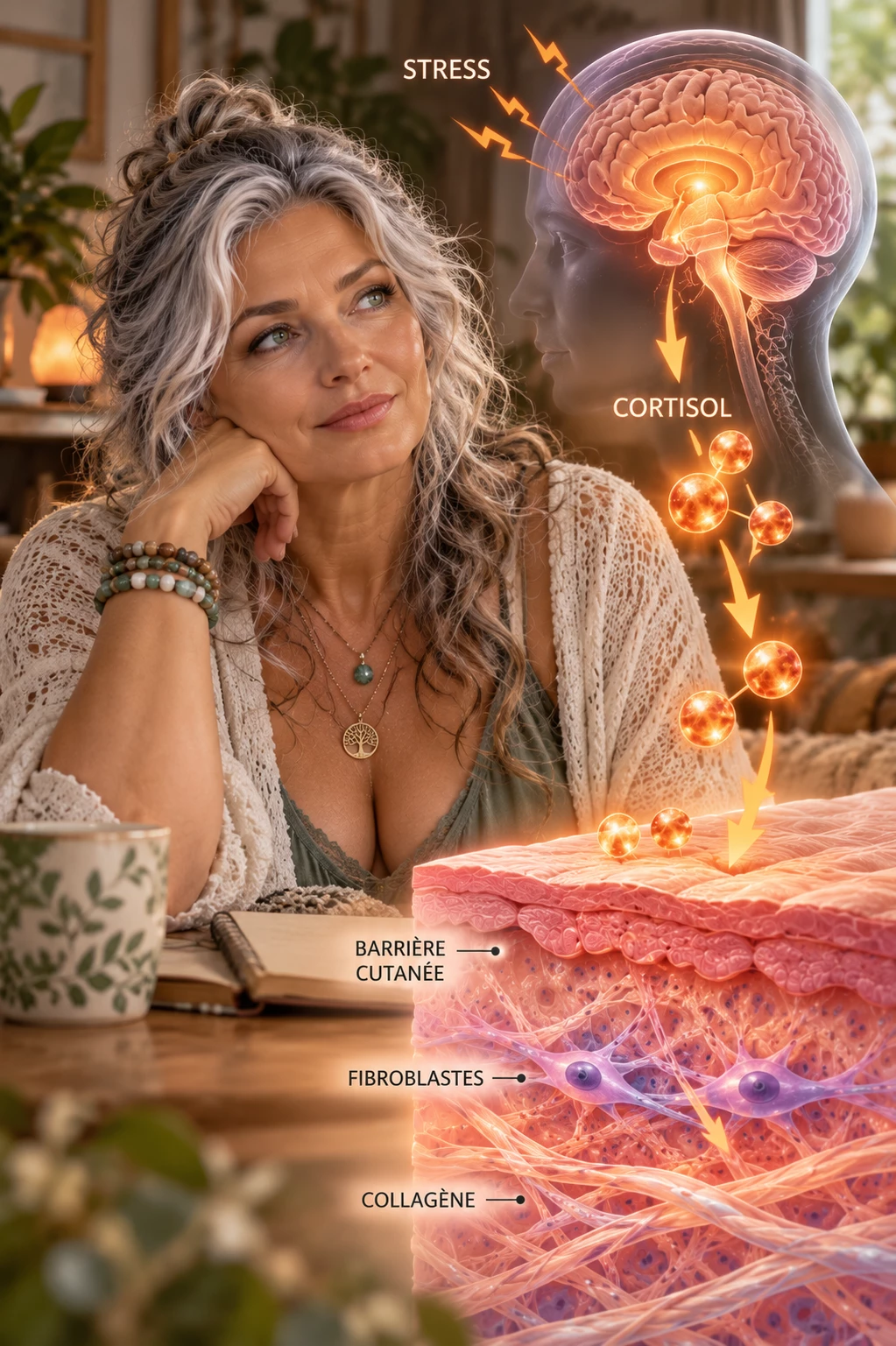
We often talk about stress as a mental state.
A day that is too long. Bad news. Responsibilities piling up. That feeling of never really being able to switch off.
But stress doesn't stay in our thoughts.
The body responds to it.
Among the hormones involved in this response, cortisol plays an important role. It helps mobilize energy when the body has to deal with a demanding situation.
In the short term, this reaction is perfectly normal.
The problem arises when the state of tension continues.
And the skin, even though it is obviously not the only part of the body affected, can feel the consequences.

Why Cortisol Matters to the Skin
The body does not give all of its functions the same priority when it has to respond to stress.
Skin regeneration is not exactly at the top of the list.
Cortisol can influence the activity of certain skin cells, particularly fibroblasts.
These cells contribute to the production of essential components of skin tissue, including collagen.
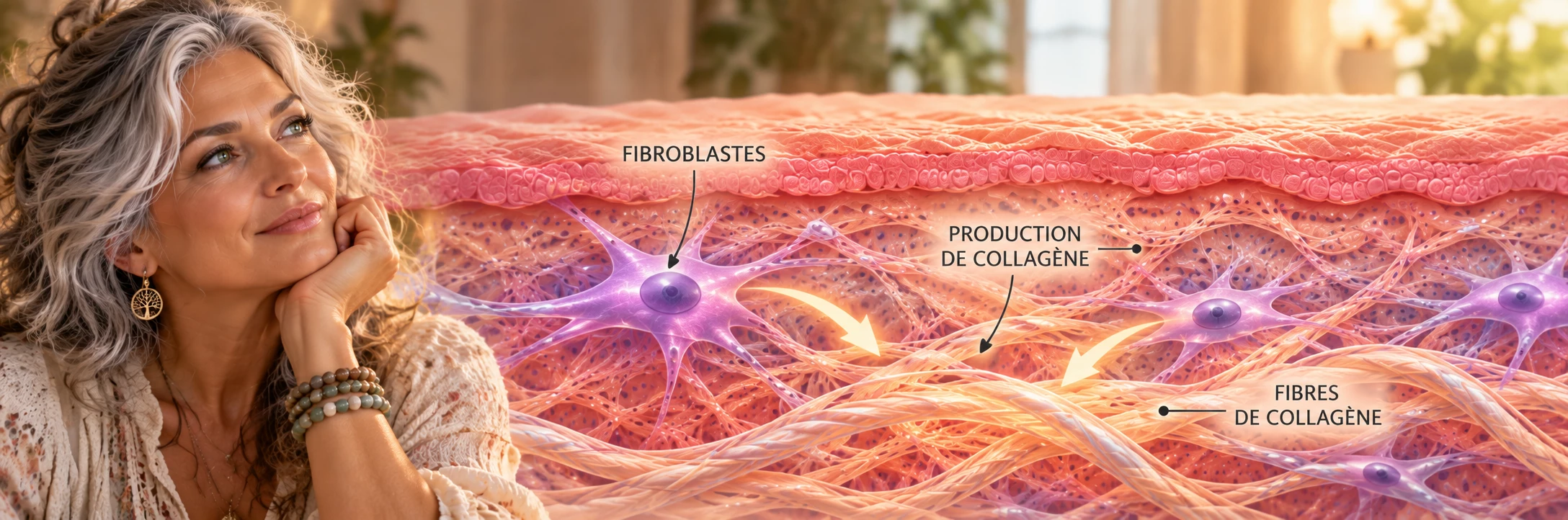
Collagen is not simply an ingredient that can be added to a cream.
It is a structural protein that contributes to the strength and density of the skin.
As we age, its production naturally changes.
When chronic stress is added to this reality, it becomes worth asking whether the skin still has the best possible conditions to maintain its functions.
Collagen Doesn't Thrive Under Prolonged Tension
It would nevertheless be too simple to reduce everything to:
"stress = cortisol = collagen destroyed."
The skin is much more complex than that.
Skin aging depends on many factors: age, sun exposure, environment, sleep, diet, hormones, lifestyle, and many others.
Chronic stress can nevertheless be part of this picture.
When cortisol levels are frequently elevated, certain mechanisms associated with tissue production and renewal may become less favorable.
So it is not simply a matter of counting wrinkles. It is also about looking at the conditions in which the skin is trying to function.
What About Inflammation?
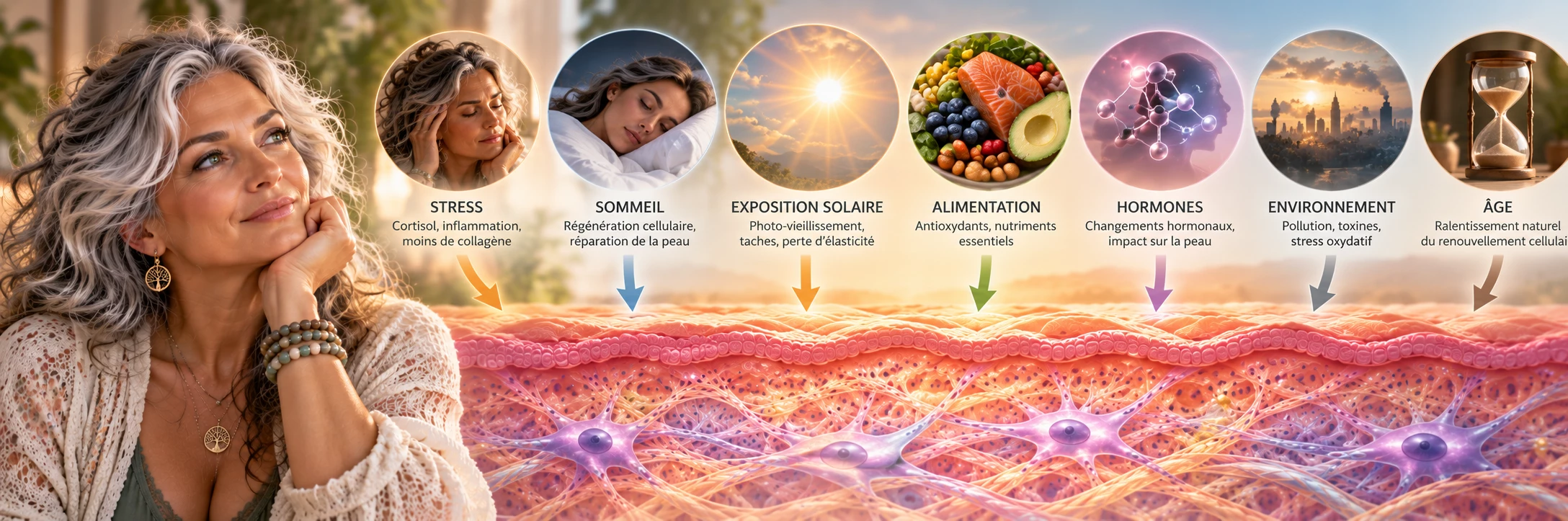
Chronic stress is also associated with inflammatory processes.
For the skin, that can matter.
Skin exposed to greater stress may become more reactive, less comfortable, and sometimes more difficult to stabilize.
The term "inflammaging" is sometimes used to describe the influence of low-grade chronic inflammation on processes associated with aging.
The term may sound dramatic.
The idea is actually quite simple: over time, small, repeated disruptions can begin to matter.
Stress is therefore not necessarily a single event that suddenly damages the skin. It can instead become one factor that gradually adds to other pressures.
Should You Be Afraid of Cortisol?
No.
Cortisol is not a bad hormone.
It is essential to many normal functions of the body.
The problem is not having cortisol.
The problem is living constantly in a state that keeps the stress system activated.
That distinction matters.
The goal is not to eliminate cortisol, but to give the body more moments when it can step out of alert mode.
The Skin Needs Time to Repair

The skin is constantly at work.
It renews itself.
It produces lipids.
It maintains its barrier.
It helps protect the body.
It responds to its environment.
So it needs resources.
And above all, it needs periods of recovery.
Sleep obviously plays an important role in our overall lifestyle.
Slow breathing, moments of calm, appropriate physical activity, and reducing sources of stress whenever possible can also help create a more favorable environment.
None of these things will make a wrinkle disappear overnight.
But they contribute to something much more interesting: the overall conditions in which our body functions.
And What About Skincare?
Skincare has its place.
A well-designed routine can support the skin barrier, improve hydration, and provide ingredients that can benefit the appearance of the skin.
Certain technologies, such as red-light photobiomodulation, are also being studied for their effects on different skin mechanisms.

But we should avoid asking a device or a serum to repair what our lifestyle continues to put under strain every day.
Stressed skin does not necessarily need more products. Sometimes it may need less irritation, more consistency, and a little more rest.
The Real Message Behind Cortisol
We tend to look for the perfect cream, the most concentrated serum, or the latest device capable of helping us turn back the clock a few years.
It is understandable.
But the skin does not live separately from the rest of the body.
It lives with us.
It goes through our short nights, our difficult periods, our hormonal changes, our days in the sun, and our moments of recovery.
Cortisol is therefore not "the enemy" of your skin. It simply reminds us that the face we see in the mirror belongs to an organism that is constantly at work.
Taking care of your skin is not only about trying to preserve its collagen.
It is also about giving it, as much as possible, an environment in which it can continue to do its job.
MEDICAL DISCLAIMER: SZ provides general information for educational purposes. It does not replace the advice, diagnosis, or treatment of a qualified healthcare professional. SZ does not diagnose, treat, cure, or prevent disease. For health-related decisions, consult a qualified professional.
Disclosure: Some links may be partner links. SZ may receive a commission from Canadian companies on qualifying purchases, at no extra cost to you and without influence on our editorial content.