
Skin Under Stress: When Stress Shows on Your Face
There are days when you look at your face in the mirror and something just doesn’t seem right.
Your skin looks duller. Your features seem more drawn. Your eyes look tired, redness becomes more noticeable, and even your usual skincare routine seems to have lost some of its effectiveness.
So you change your serum. You add another cream. You try a mask.
But sometimes, the problem isn’t really the product you’re putting on your skin.
It lies a little deeper: in the way your body responds to stress.
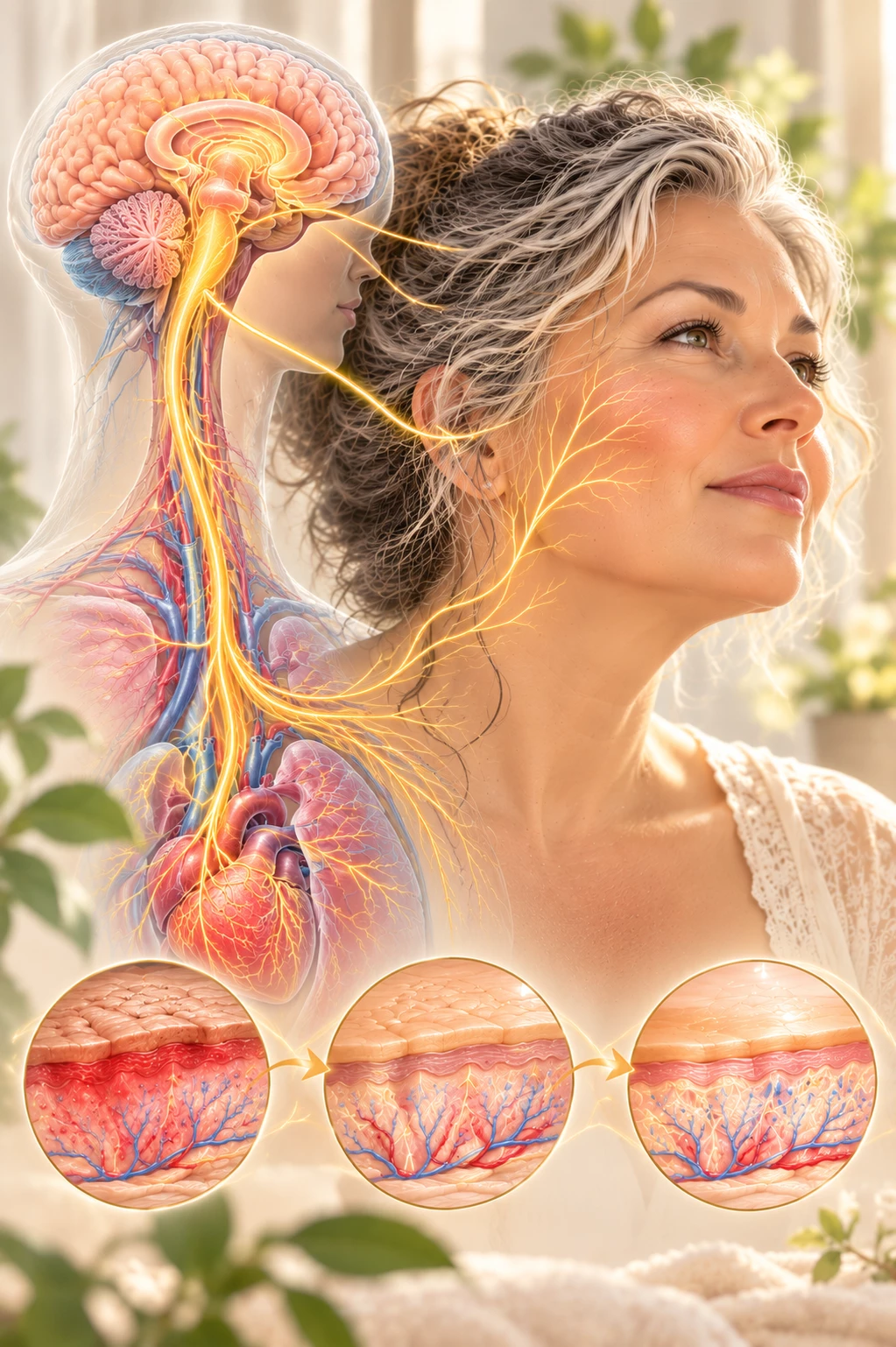
Your skin is not separate from the rest of your body. It is constantly receiving signals from your nervous system.

When Stress Shows Up on Your Skin
Stress isn’t just a psychological experience.
When it becomes frequent or chronic, it can affect many physiological processes: heart rate, breathing, muscle tension, sleep, digestion and the body’s inflammatory response.
Your skin is not immune to these changes.
It has its own network of nerves and communicates constantly with the brain and the rest of the body. This is one reason some people notice changes in their skin during particularly difficult or stressful periods.
A blemish appears just before an important event.
A flare-up of redness accompanies a stressful period.
Skin that is normally comfortable suddenly becomes much more reactive.
It’s not “all in your head.”
The connection between the brain and the skin is very real.
The Vagus Nerve: The Body’s Messenger of Calm
One of the important players in the relationship between the brain and the body is the vagus nerve.
It is part of the parasympathetic nervous system, which is commonly associated with rest, recovery and digestion.

To put it simply, our autonomic nervous system operates through different modes.
When we are under stress, the body prepares to respond. The heart rate increases, breathing changes and the muscles become more tense.
By contrast, when the body perceives a sufficient sense of safety, the mechanisms associated with rest and recovery can take a more prominent role.
The vagus nerve is involved in this regulation.
The vagus nerve should not be viewed as a magic switch capable of instantly transforming tired-looking skin. Rather, it is part of a much broader network involved in regulating the autonomic nervous system. The goal is therefore to encourage an overall state of calm and recovery, rather than to seek a miracle effect on the skin.
What Can Stress-Related Skin Look Like?
There is, of course, no single form of “stressed skin” that looks the same on everyone.
But certain changes are commonly noticed:
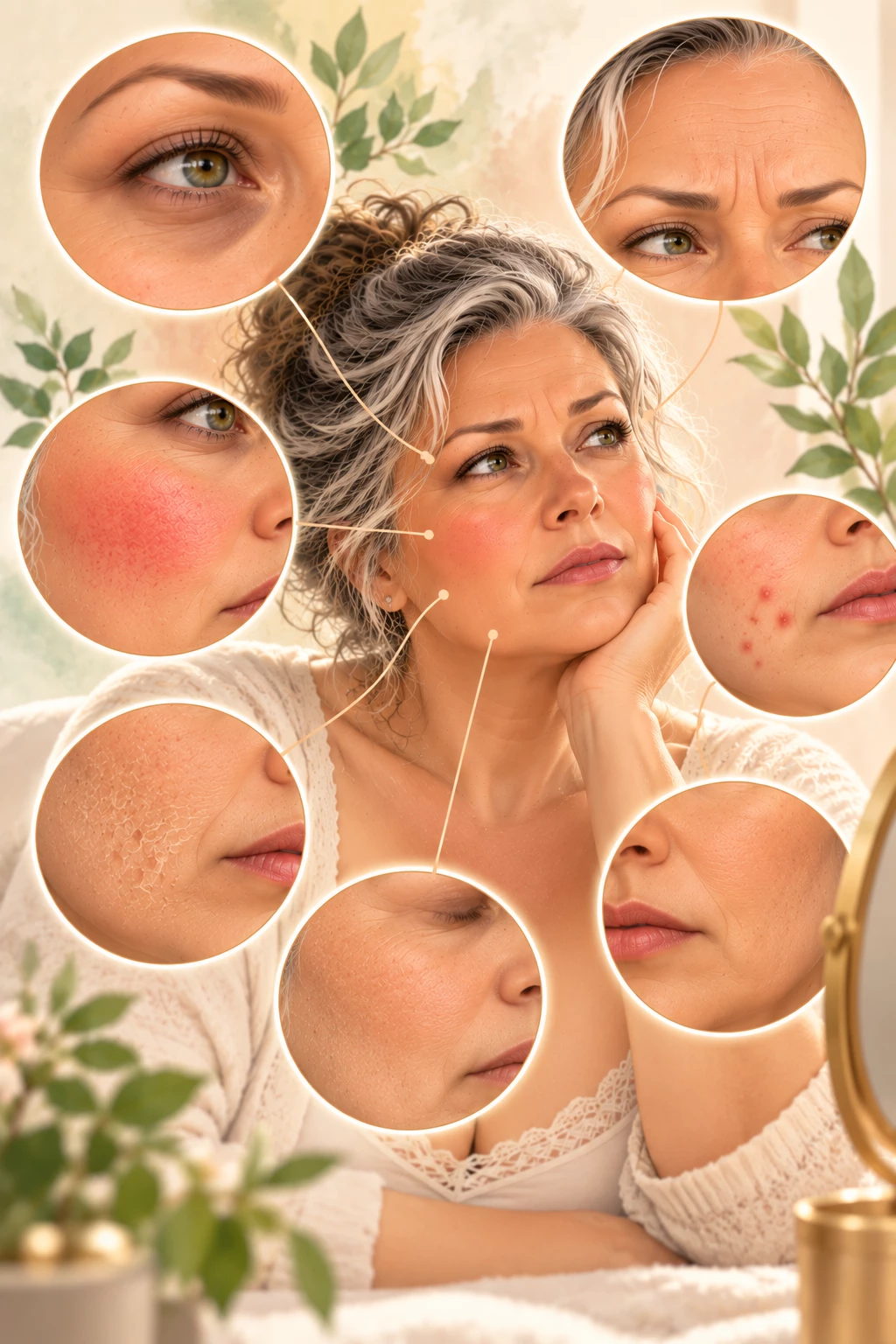
• A less radiant complexion that gives the face a tired appearance.
• Skin that seems more reactive than usual.
• More noticeable redness.
• A feeling of discomfort or tightness.
• Blemishes that seem to appear more easily.
• Facial features that feel particularly tense or drawn.
• An overall more tired appearance after several nights of insufficient sleep.
These signs alone cannot establish that stress is responsible for a skin problem. Changes in the skin can also be influenced by hormones, climate, skincare products, sleep and many other factors.
But when these changes appear alongside a particularly stressful period, the nervous system certainly deserves a place in the equation.
What If Your Routine Started Before Your Serum?
This is probably the most interesting idea to take away.
Taking care of your skin isn’t only about giving it active ingredients.
It also means creating conditions in which your body can recover.
A gentle cleanse.
A comfortable temperature.
A few slow breaths.
A light massage.
An evening with less stimulation.
A reasonably consistent sleep routine.
And why not set aside a few intentional minutes of calm before applying your skincare?

Your serum works on your skin. Your environment affects your skin too. Your nervous system is part of that internal environment.
Beauty doesn’t always begin with a new product.
Sometimes, it begins simply when your body realizes that it can finally slow down.
MEDICAL DISCLAIMER: SZ provides general information for educational purposes. It does not replace the advice, diagnosis, or treatment of a qualified healthcare professional. SZ does not diagnose, treat, cure, or prevent disease. For health-related decisions, consult a qualified professional.
Disclosure: Some links may be partner links. SZ may receive a commission from Canadian companies on qualifying purchases, at no extra cost to you and without influence on our editorial content.