
Hyaluronic Acid: High or Low Molecular Weight — Which One Should You Choose?
Not all hyaluronic acids behave in exactly the same way. The size of the molecules influences, among other things, how they interact with the surface of the skin.
You have probably already seen this expression on a serum: “multi-molecular-weight hyaluronic acid.”
On paper, it sounds rather technical, but in reality, the principle is quite simple.
The size of hyaluronic acid molecules influences how they behave on and within the different superficial layers of the skin.
Understanding this difference can help you make more informed choices when selecting your skincare products.


Why Do We Talk About Molecular Weight?
A hyaluronic acid molecule can be larger or smaller.
The larger it is, the more likely it is to remain on the surface of the skin.
The smaller it is, the more differently it can interact with the superficial layers of the skin.
This is why modern formulations sometimes combine several molecular sizes.
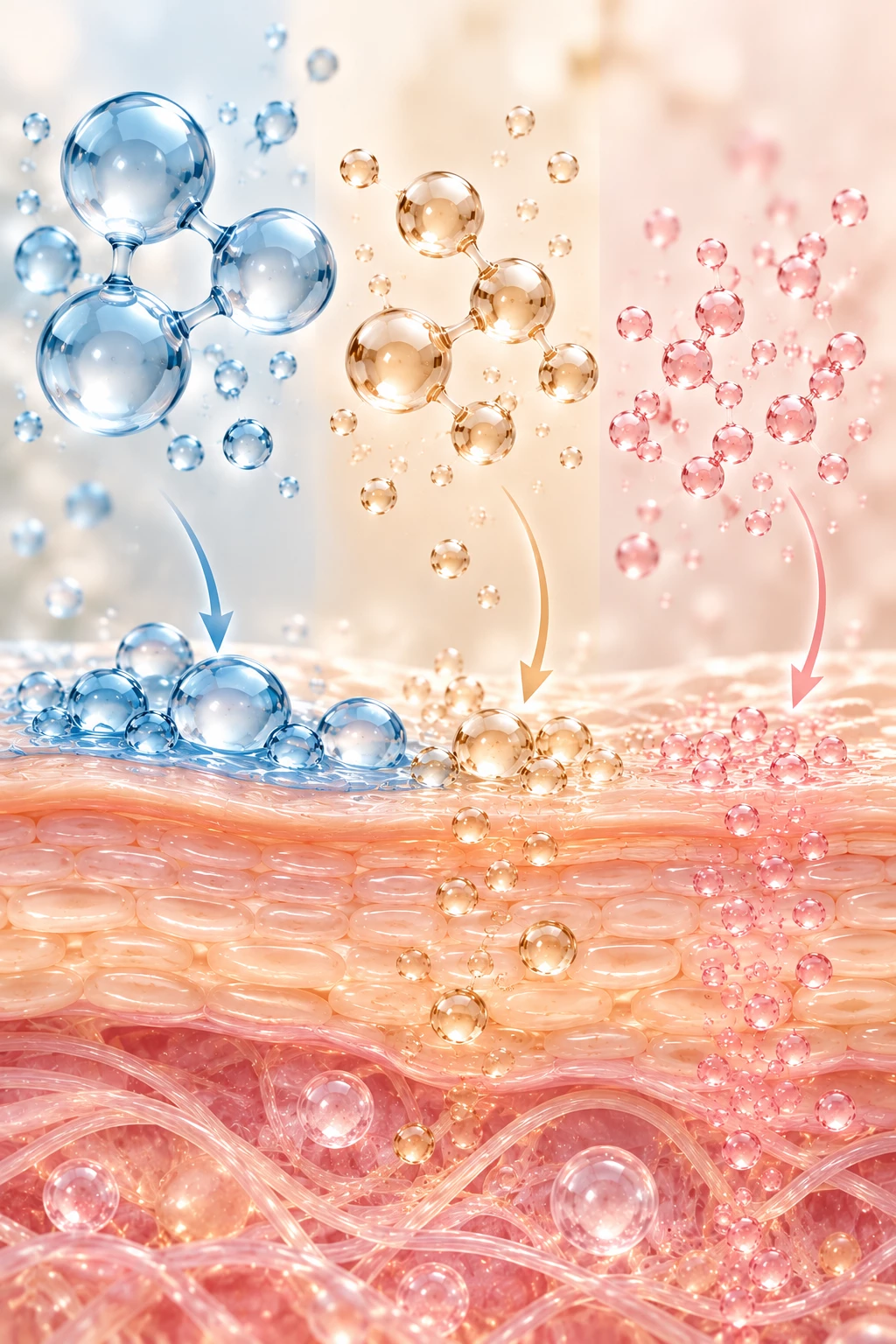
The term “low molecular weight” does not automatically mean “better.” It all depends on what you are looking for.
High Molecular Weight: The Protective Cocoon Effect
High-molecular-weight molecules are relatively large.
They tend to remain closer to the surface of the skin.
They can therefore help form a moisturizing film that limits water loss and quickly gives the skin a softer, more comfortable feel.
This is one of the reasons behind the smoothing effect that can be observed after applying certain serums.

The desired result is primarily superficial:
feeling of comfort;
softer skin;
smoother appearance;
visibly plumper-looking skin.
For skin that feels tight or lacks comfort, this action can be particularly interesting.
Low Molecular Weight: Smaller Molecules
Smaller molecules behave differently.
They can interact more easily with the superficial layers of the skin.
This is why they are often used in formulations designed to provide additional hydrating benefits alongside those provided by larger molecules.
But there is a common misconception worth addressing.
Smaller does not necessarily mean more effective.
A serum containing only one form of hyaluronic acid is not necessarily inferior to a multi-molecular-weight serum. The overall quality of the formulation matters enormously.
Why Are Multi-Molecular-Weight Serums Interesting?
This is probably the simplest option for people who do not want to spend their time dissecting an entire cosmetic formula.
A multi-molecular-weight serum combines several sizes of hyaluronic acid molecules.
The idea is to work across several levels of the skin’s surface:
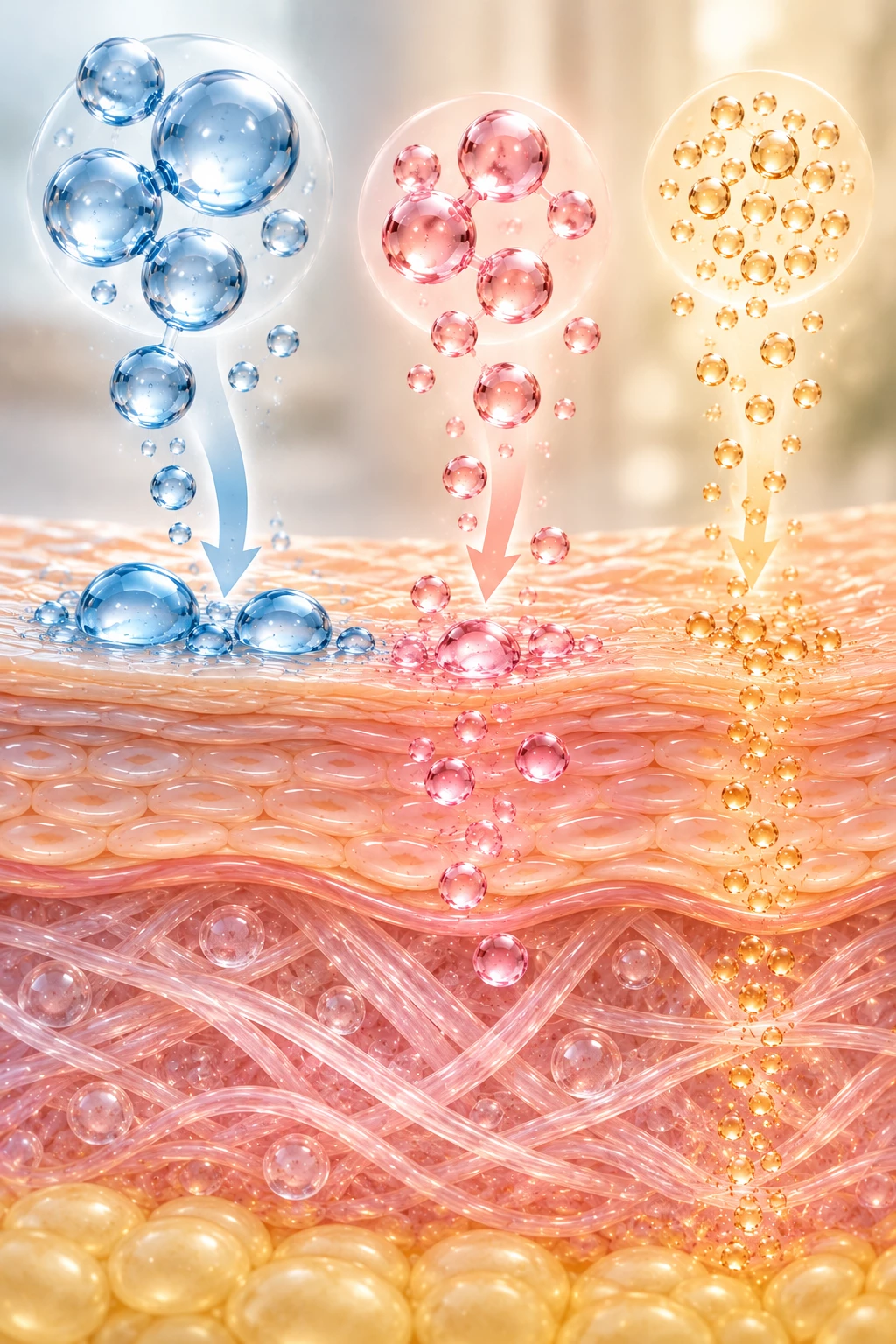
the larger molecules contribute to surface hydration;
the smaller molecules complement this action;
together, they provide a more comprehensive feeling of hydration;
the skin appears softer and more plump.
This type of formulation is particularly easy to incorporate into a daily skincare routine.
A good serum does not need an endless list of ingredients to be worthwhile.
How Do You Choose the Right Serum?
Rather than looking only at the percentage of hyaluronic acid, it is better to consider the formulation as a whole.
Several factors can help guide your choice:
several molecular weights;
presence of complementary hydrating ingredients;
formula suited to your skin type;
pleasant texture;
good tolerance;
absence of ingredients your skin does not tolerate well.
There is also one essential thing to remember: an extraordinary serum that you do not enjoy using will probably end up sitting at the back of your cupboard.
The best routine is the one you can actually maintain.
The “More Is Better” Trap
In skincare, it is easy to fall into the “more is better” mindset.
More hyaluronic acid.
More active ingredients.
More products.
More layers.
Yet your skin does not necessarily need an endless routine.
A well-designed formula, applied correctly and consistently, can be much more beneficial than simply piling on products.
Your skin does not need to be constantly “stimulated.” It also needs comfort, hydration and stability.
So, Which One Should You Choose?
If you are looking for a simple solution, a serum containing several molecular weights is an interesting option.
It allows you to benefit from the complementary properties of different molecular sizes without having to multiply the number of products in your routine.
But beyond the label, remember this above all:
the best formula is the one that genuinely hydrates your skin, is well tolerated and that you use consistently.
[/writing]
MEDICAL DISCLAIMER: SZ provides general information for educational purposes. It does not replace the advice, diagnosis, or treatment of a qualified healthcare professional. SZ does not diagnose, treat, cure, or prevent disease. For health-related decisions, consult a qualified professional.
Disclosure: Some links may be partner links. SZ may receive a commission from Canadian companies on qualifying purchases, at no extra cost to you and without influence on our editorial content.