
How to Protect Dry Skin During Winter
Protecting dry skin in winter involves more than simply applying extra moisturizer. The key is to reduce environmental stress, preserve the skin barrier, and choose ingredients that help maintain hydration.


Cold Weather Is Only Part of the Problem
When temperatures drop, we naturally think about the cold.
But the problem is a little more complex.
Wind can increase discomfort. Outdoor air is often dry. Then, once indoors, heating changes the conditions to which the skin is exposed yet again.
Our faces are therefore constantly moving between different environments.

For dry or mature skin, these repeated changes can quickly lead to tightness and discomfort.
Step One: Cleanse Without Stripping the Skin
Cleansing is sometimes underestimated.
Yet a harsh cleanser or very hot water can intensify the feeling of dryness.
During winter, dry skin generally benefits from a gentle cleansing routine.
The goal is not to leave your skin feeling as though it has been completely stripped of everything.
Quite the opposite.
After cleansing, your skin should still feel comfortable.
Step Two: Help the Skin Retain Water
This is where humectants such as glycerin become particularly useful.
They help the skin retain water and provide a valuable foundation for a skincare routine designed for dry skin.
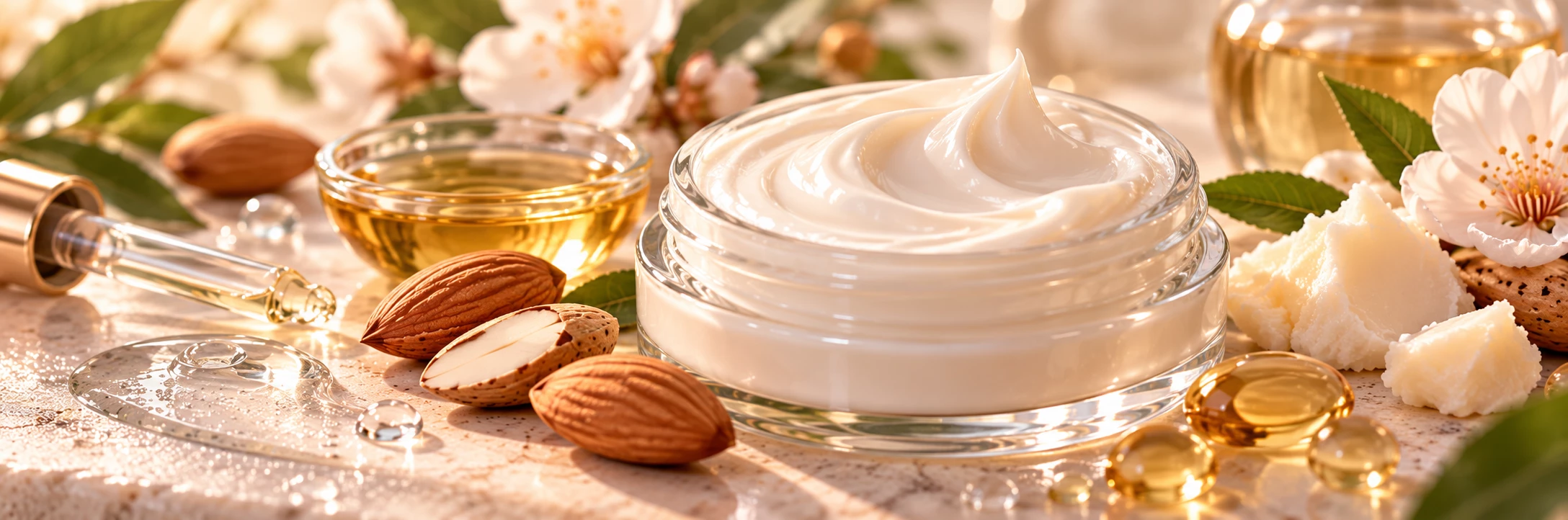
However, a humectant should not be considered a complete solution on its own.
The goal is to build a routine that both hydrates the skin and helps reduce water loss.
Step Three: Add Lipids and Improve Comfort
Emollient ingredients play a complementary role.
Sweet almond oil is one example.
It provides lipids and can help make the skin feel softer, more supple, and more comfortable.
A cream containing emollient ingredients can therefore be particularly pleasant during the colder months.
But once again, everything depends on the overall formulation.
Step Four: Support the Skin Barrier
The skin barrier deserves particular attention during winter.

Ceramides occur naturally in the skin and contribute to its structure and protective function.
A skincare routine containing ceramides can therefore help support this barrier.
This approach is particularly useful when the skin seems persistently dry, sensitive, or uncomfortable.
A Simple Five-Step Winter Skincare Routine

An effective winter skincare routine does not need to be complicated:
Gently cleanse your face.
Use a moisturizer containing humectants such as glycerin.
Add emollient ingredients to improve comfort and suppleness.
Look for ceramides if your skin barrier seems particularly compromised.
Limit unnecessary stress on the skin, especially very hot water and overly harsh products.
Don't Overlook the Role of Your Environment
You can apply the best moisturizer in the world and still experience discomfort if your environment remains particularly dry.
At home, heated indoor air can become very dry.
Depending on the conditions in your home, maintaining a comfortable indoor humidity level may therefore be helpful.
It is also worth avoiding frequent, very hot showers, which can worsen dryness in some people.
When Does Dryness Become a Real Problem?
Occasional dry skin is one thing.
Skin that remains red, painful, cracked, or severely irritated is another.

When discomfort becomes significant or persistent, simply adding more cosmetic products is not the answer.
Certain skin conditions can resemble ordinary dryness and may require appropriate treatment.
In such cases, seeking advice from a healthcare professional is preferable.
The Best Defense: A Consistent Routine
Dry skin does not necessarily need an endless skincare routine.
Above all, it needs consistency.
During winter, focus on three key principles: providing water, improving lipid-based comfort, and preserving the skin barrier.
Glycerin, emollient oils such as sweet almond oil, and ceramides can each contribute to this approach.
And that is probably the best way to think about winter skincare: rather than searching for a miracle ingredient, give your skin the conditions it needs to better withstand the cold season.
MEDICAL DISCLAIMER: SkinZenitude provides general information for educational purposes. It does not replace the advice, diagnosis, or treatment of a qualified healthcare professional. SkinZenitude does not diagnose, treat, cure, or prevent disease. For health-related decisions, consult a qualified professional.
Disclosure: Some links may be partner links. SkinZenitude may receive a commission from some companies on qualifying purchases, at no extra cost to you and without influence on our editorial content.